Software quality is an essential factor in the success of any project. Poorly written code can lead to bugs, crashes, security issues, software failures, performance problems, and other issues that can cause significant headaches down the road. Poor software quality can also result in higher costs, longer development cycles, and an increased risk of failure. In
Six Sigma is an approach to quality management that was developed by Motorola in 1986. It has been used by many companies around the world since then. The goal of Six Sigma is to improve the quality of products and services while reducing costs. There are five main steps to implementing Six Sigma. These steps are
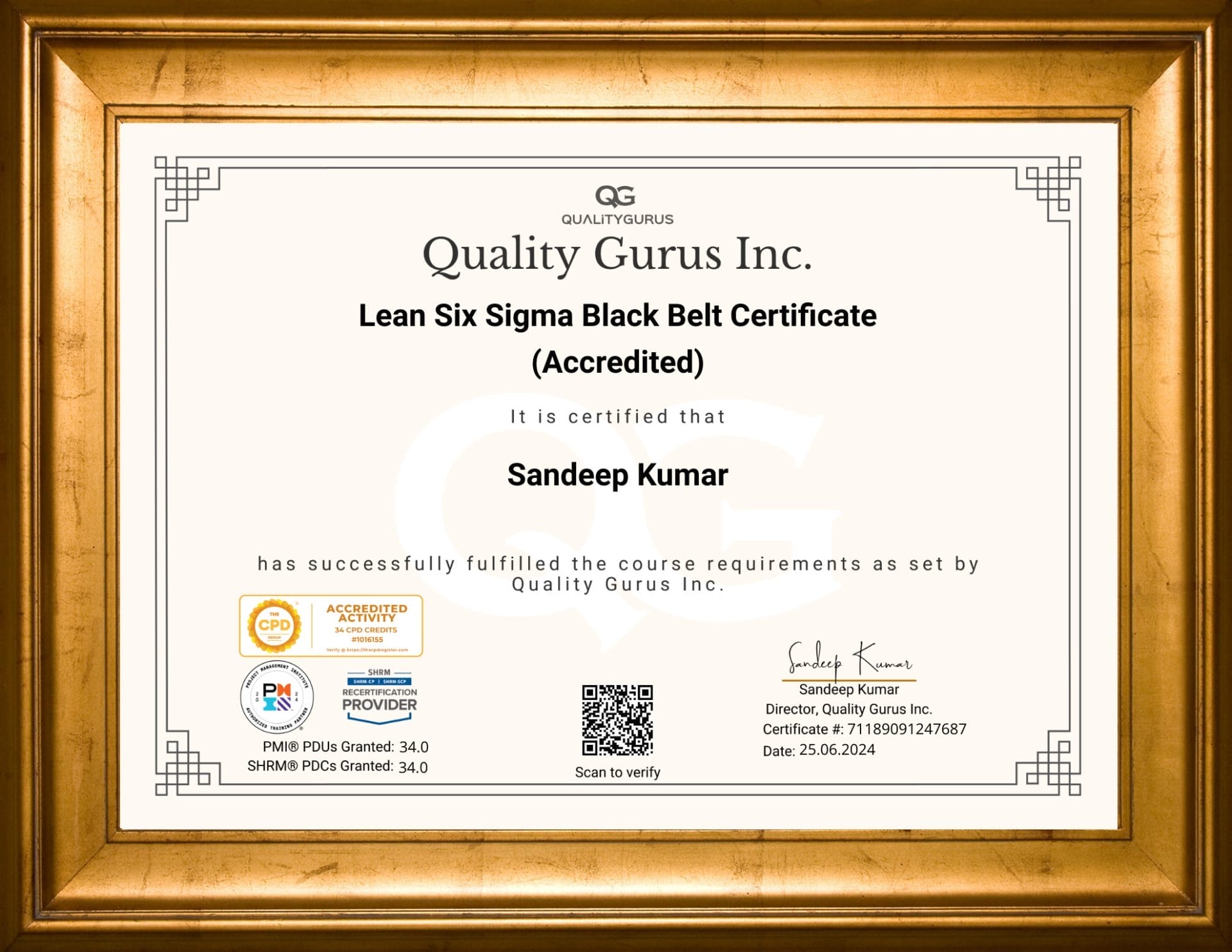
Quality Gurus Inc. CertificationWe are pleased to announce the launch of the FREE Certification Exams for our Udemy students. (Example Certificate) Have you completed one of our these courses on Udemy? (If not, you can buy them now using the below discount links.)INDIVIDUAL COURSE CERTIFICATES:Six Sigma White BeltSix Sigma Yellow BeltSix Sigma Green BeltSix Sigma Black BeltQuality
Process improvement is an integral part of manufacturing. It is also a critical component of quality control. Identifying problems early and correcting them before they become costly issues is the key to success. The origin of these tools can be traced back to the 15th century. This was when the monk named Benkei was said to
What is the difference between defect and defective?Defect means not meeting a specific requirement or the specification, or failing to achieve a specific customer/client CTQ. A product could have multiple defects. Some of these defects might not even be noticeable by the client. These defects do not functionally affect the performance of the product, still
What is the difference between accuracy and precision?Accuracy refers to the closeness between measurements and their expected or true value (The farther a measurement is from its expected or the true value, the less accurate it is.) Precision pertains to the closeness of measurements to one another.Statistical scheme of accuracy and precision on targetOne way that
Recent Posts: