

In boardrooms across the globe, executives are wrestling with a stubborn challenge: despite huge investment in technology, talent, and transformation projects, productivity gains remain hard to achieve and competitive advantages don't last long. At the same time, employee engagement is flat or falling in many organizations. What's missing?
The answer may lie in a discipline that many still think belongs only in compliance departments: quality management.
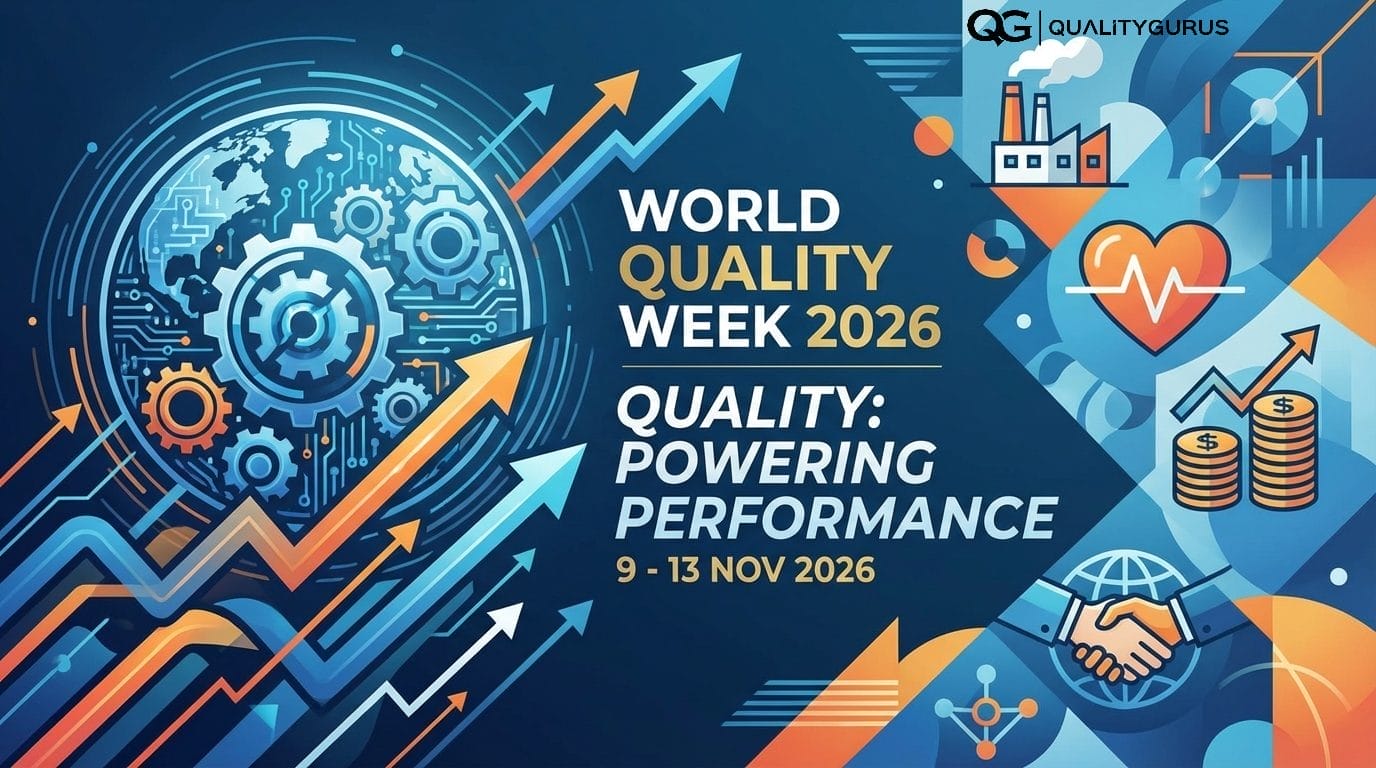
As we observe World Quality Week 2026, the Chartered Quality Institute's theme, Quality: Powering Performance, offers a fresh perspective. What if quality isn't just about catching defects? What if it's actually about unlocking your organization's potential?
Rethinking Performance
Most performance improvement initiatives focus on doing more: more features, more speed, more automation. But lasting performance isn't just about addition. It's about optimization. It's about understanding what creates value, then systematically maximizing that value while eliminating what wastes it.
This is exactly where quality management excels, yet many organizations don't use it to its full potential. Quality, at its best, helps answer three critical questions:
- What truly drives value in our organization?
- How well are our systems actually delivering that value?
- How do we continuously improve our performance over time?
Let's explore each of these and what they mean in practice.
Question One: What Drives Your Performance?
Before you can improve performance, you need to understand what performance actually means for your organization. This sounds obvious, but many organizations operate on old assumptions rather than current facts.
Consider these questions:
- Can your leadership team name, with evidence (not just opinions), the top five things that drive quality outcomes in your business?
- Do you know which parts of your product or service customers genuinely value versus which parts you keep out of habit?
- Have you mapped the critical risks that could stop you from delivering that value?
Without clear answers to these questions, performance improvement becomes guesswork. You might optimize processes that don't matter while neglecting the ones that do.
Action Step: Run a quarterly "performance driver review" where cross-functional teams examine assumptions about what creates value. Challenge old thinking. Test beliefs with data. This isn't a one-time task. Your performance context changes as markets, technologies, and customer expectations shift.
Question Two: Do Your Systems Work Together?
Even with perfect clarity on what drives performance, you need systems that help people, processes, and technology work together rather than against each other.
The reality in most organizations? Fragmentation. Marketing makes promises that operations struggles to deliver. Innovation teams create solutions that customer-facing teams haven't been trained to support. Technology investments create new barriers instead of connecting what already exists.
Quality management provides frameworks for integration, but only if you ask the right questions:
- Who actually owns end-to-end processes versus individual steps within them?
- How do you know when your management systems are working versus just existing on paper?
- What mechanisms exist to ensure alignment between strategy, what gets done, and improvement?
Action Step: Map a critical customer journey from start to finish. Identify every handoff, every technology touchpoint, and every decision point. Look specifically for gaps in ownership, conflicts in priorities, and places where better integration could eliminate waste or add value. Then assign clear accountability for the entire flow, not just individual stages.
Question Three: How Do You Turn Data Into Improvement?
Here's where many organizations struggle: they collect mountains of performance data but lack the structure to convert it into meaningful improvement.
Ask yourself:
- Are you measuring what matters, or what's easy to measure?
- Who decides which improvements get resources and which get ignored?
- Is improvement in your organization planned and coordinated, or scattered and random?
- Do your teams have both the tools and the permission to continuously improve?
Without governance, improvement becomes chaotic. Without capability, it becomes theater. Without the right metrics, it goes in the wrong direction.
Action Step: Create an "improvement portfolio review" similar to how you review projects or products. Evaluate current improvement efforts against strategic priorities. Stop redundant efforts. Identify critical gaps where improvement is needed but not happening. Ensure your teams have both the technical skills (problem-solving methods, data analysis) and the cultural permission to challenge how things work.
The Technology Opportunity
Here's where quality is experiencing its biggest evolution. Leading organizations aren't choosing between traditional quality methods and new technologies. They're strategically combining them.
Statistical process control isn't being replaced by AI. It's being enhanced by it. Machine learning can find patterns across datasets too large for humans to analyze, but it still needs the rigorous thinking that quality methods provide. Predictive analytics can forecast potential failures, but you still need systematic ways to prevent and fix them.
The quality professionals gaining influence in 2026 aren't those sticking only to traditional methods, and they're not those chasing every technology trend either. They're the ones who understand how to amplify proven quality principles with new capabilities. They use AI to improve decision-making while keeping the discipline of root cause analysis. They deploy automation while keeping the rigor of process validation.
Making This Week Matter
World Quality Week offers more than social media posts. It provides a chance to create real change. Here's how:
1. Start with a Strategic Conversation
Bring together leaders from outside the quality function. Ask them where performance is falling short of expectations. Don't defend current approaches. Listen for opportunities.
2. Run a Focused Review
Choose one critical performance challenge your organization faces. Apply the three-question framework: Are we clear on what drives performance here? Do our systems enable or block it? Are we improving it systematically or just reacting?
3. Pick One High-Impact Change
Don't create a 50-point action plan. Identify the single change that would have the biggest impact on performance. Get specific about who's accountable, what resources are needed, and when it will happen.
4. Connect the Silos
Quality issues rarely stay in one department. Use this week to start conversations between departments that need to work together better but rarely do.
5. Change the Conversation
Stop talking about quality as compliance. Start framing it as competitive advantage. Share examples of how quality thinking has prevented costly mistakes, sped up innovation, or improved customer loyalty.
The Strategic Question
Organizations that treat quality as a defensive function (catching mistakes before they escape) will always be playing catch-up. Those that see quality as an offensive capability (a method for understanding value, optimizing delivery, and driving continuous improvement) position themselves to lead.
The question isn't whether quality matters. The question is whether you're using it strategically or just tactically.
This World Quality Week, ask yourself: Is quality powering your performance, or is it just monitoring it?
The gap between those two options may be larger (and more valuable) than you think.